
Steel Belt Traction Home Elevator with Smooth & Quiet Operation.
A completed three-story, three-stop home elevator in Xiaoji Town, Xinxiang County, featuring a steel-belt traction system and counterweight-side gantry structure designed for residential stability and quiet operation.
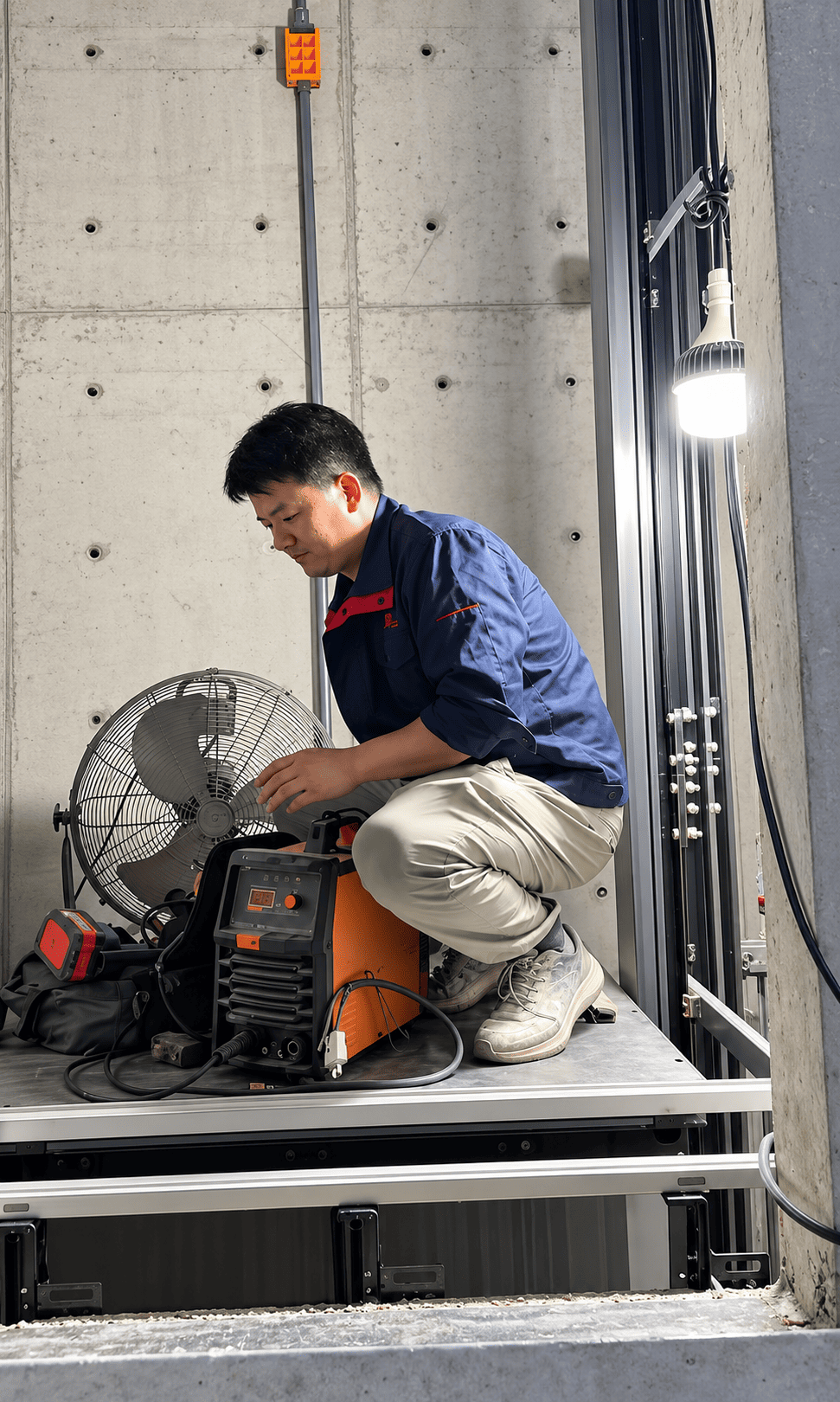
A residential elevator tested for stability after installation.
Henan Shumeida Elevator Co., Ltd. completed the installation and commissioning of a three-story, three-stop home elevator in Xiaoji Town, Xinxiang County.
The project was customized for a self-built residential application and uses a steel-belt traction system combined with a counterweight-side traction gantry structure.
After installation, the technical team carried out on-site operational and stability tests to verify the performance of the completed elevator.
Mechanical structure, transmission, alignment and final commissioning all influence how stable and quiet a home elevator feels in actual use.
Steel belt + counterweight-side traction structure.
The project combines a steel-belt traction transmission with a side-mounted counterweight layout to match the structural conditions of the residential shear-wall hoistway.
Steel Belt Transmission
Flat steel-belt transmission is used instead of a conventional steel wire rope arrangement.
Traction Gantry Structure
The gantry configuration provides the main structural basis for this residential traction elevator.
Side Counterweight
The counterweight is arranged on the side to better coordinate the elevator with the project’s shear-wall shaft.
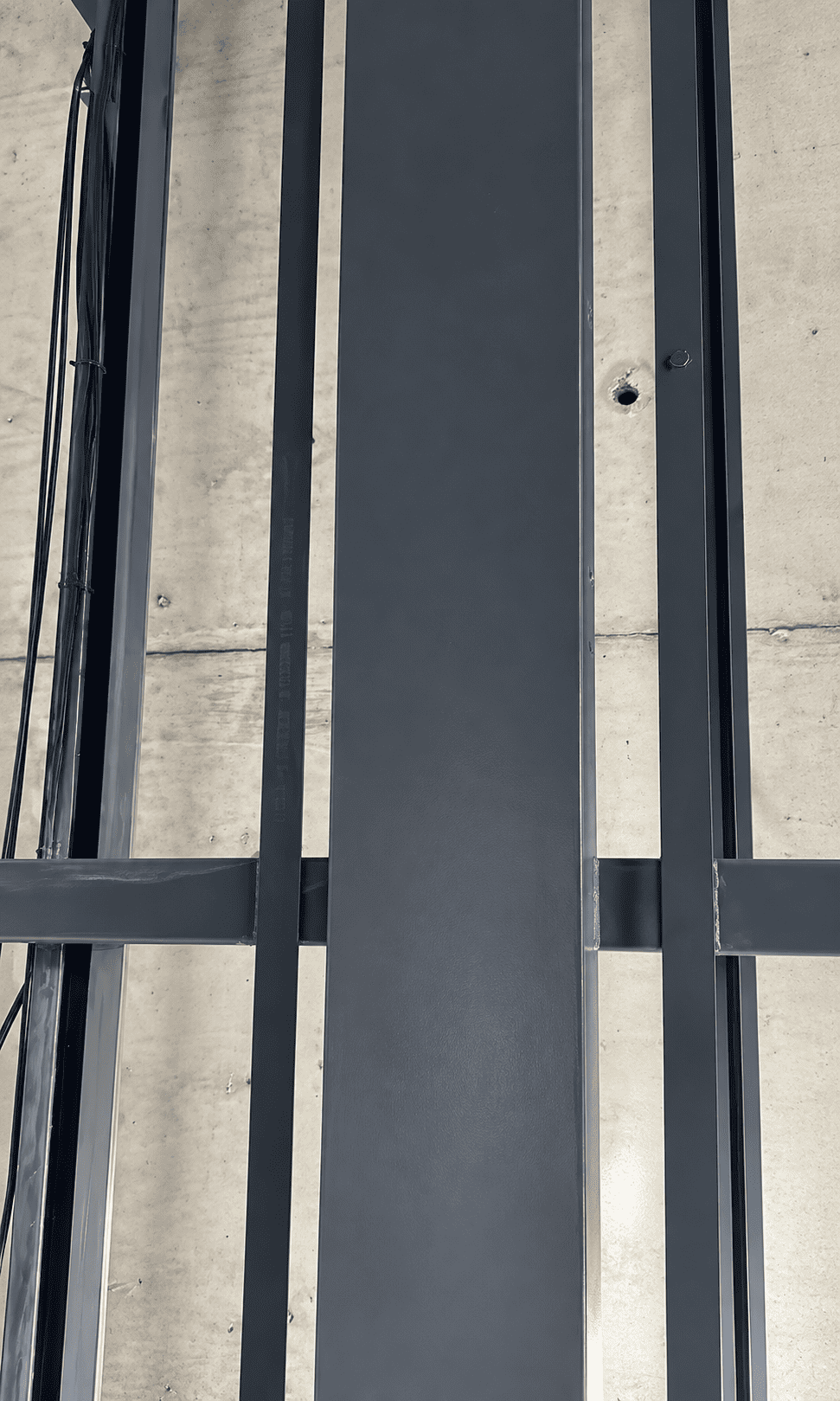
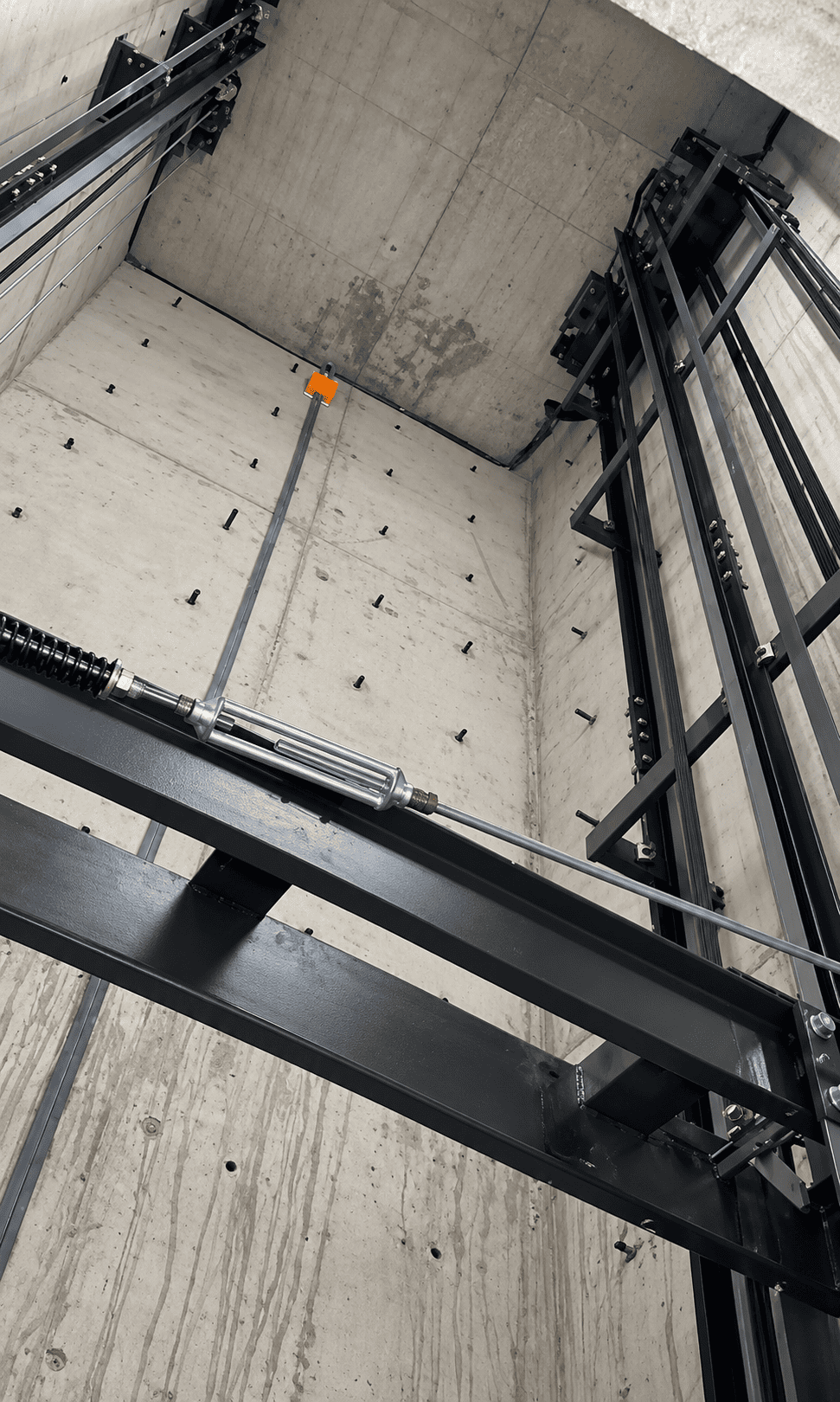
Stability checked after installation.
During on-site testing, technicians placed tools inside the elevator car and carried out a shaking test to observe car stability.
The car showed no obvious displacement during the test. The elevator was also tested during both upward and downward operation.
Designed for smooth residential traction performance.
The steel-belt transmission provides several practical characteristics that support residential comfort and long-term maintenance.
The polyurethane outer layer helps absorb vibration, supporting a more comfortable ride.
The flat belt structure increases the contact area with the traction sheave.
Increased traction contact supports reliable grip during elevator operation.
The steel-belt system does not require the lubrication maintenance associated with traditional wire-rope systems.
Counterweight placement matched to the shear-wall shaft.
The counterweight-side arrangement was selected to work with the structural characteristics of this project’s shear-wall hoistway.
The goal is to coordinate mechanical structure with the available shaft space while maintaining the stability required for residential elevator operation.

What matters after the elevator starts moving.
For a home elevator, actual user experience depends on more than whether the equipment can travel between floors. Stability, vibration, noise and maintenance requirements all matter.
Stable Car
Structural and mechanical installation support stable car behavior.
Smooth Travel
Upward and downward running tests demonstrated smooth operation.
Quiet Operation
The completed elevator showed no noticeable operating noise during site testing.
Lower Routine Maintenance
Steel-belt transmission removes the need for routine lubrication of the traction medium.
Installed. Commissioned. Tested.
The completed project demonstrates the combination of steel-belt transmission, traction gantry structure and side-counterweight layout in a three-story residential application.
Build. Align. Commission. Verify.
Final residential elevator performance depends on both the equipment configuration and the quality of site installation and commissioning.
Mechanical Installation
Install the traction, guide and counterweight structures.
System Alignment
Check mechanical positioning and operational alignment.
Commissioning
Run the elevator and adjust the system before handover.
Performance Verification
Check stability, running smoothness and operating noise on site.
Product technology and installation handled together.
Residential elevator performance depends on both the selected drive structure and how accurately the equipment is installed and commissioned on site.
The project uses the company’s traction gantry technical capability.
Installation is carried out by the company’s own certified team.
Direct project execution helps maintain control over installation quality.
In-house installation management also supports more controllable project scheduling.
Looking for a quiet, stable home elevator solution?
Send us your shaft dimensions, number of floors, site photos and basic project requirements.
We can review the building conditions and discuss whether a steel-belt traction configuration is suitable for your residential project.
- Shaft width and depth
- Number of floors and stops
- Floor-to-floor heights
- Pit and overhead conditions
- Wall / shaft structure
- Preferred door location
- Site photos or drawings
Request a Home Elevator Review
Tell us about your shaft and residential project.